


Modular site cabins in Ukraine — sale and rent of construction units in Ukraine
-

Manufacturing of trailers, guard posts, utility rooms, summer houses.
9 000 UAHSaleSale-Rental-Order-Manufacturing: Trailers, guard posts, foreman cabins, utility rooms, mobile offices, kiosks, summer houses, trade pavilions, and various modular constructions. We will do it quickly …Lviv - Today at 10:44 -

WAGONS, guard posts, utility cabins, on a metal frame Available
9 000 UAHSaleManufacturing to order: guard posts, foreman cabins, utility cabins, mobile offices, kiosks, country houses, trade pavilions, and various modular structures. We will do it quickly and efficiently!!! W…Lviv - Today at 10:43

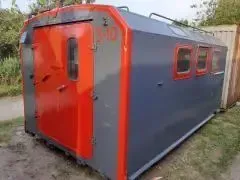
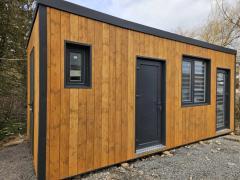


In the construction industry, the term "site cabin" is well known. It serves various purposes, which is why it comes in many types, has different features, and is made from various materials. In this article, we will look at the types of site cabins and the materials they are made from. For those looking to buy a cabin at a good price, this information will help in finding and choosing the optimal solution.
What is a Site Cabin?
This term is colloquial and refers to a small standalone structure. It can be used as a temporary facility or, if needed, as a permanent one. Most often, site cabins are used on industrial sites, construction sites, summer houses, and warehouses.
Visually, a site cabin is a small utility-type building used by workers (builders, office staff, laborers, etc.) for living, cooking, short rest, changing clothes, or as storage for tools and materials.
Today, the concept of a "site cabin" is broader: it can now be used not only as a temporary storage unit or utility room but also as a full-fledged guard post, modern office, or even a summer house. With thoughtful setup, it can be functional and high quality.
Garden cabins are small houses with various layouts depending on their purpose. If desired, they can be equipped for living, including a bathroom. Since they are mobile structures, they can be easily transported, for example, with a crane truck.
Another option on the market is construction trailers – former military kungs repurposed for construction use. Their advantages include durability, good thermal insulation, and ease of transport.
Types of Modular Cabins
The main classification is based on purpose: cabins are used for installation on summer plots, construction sites, and similar locations. Modular blocks vary in design: simple, combined, with or without amenities, with or without steps.
Each of these types has its own features, offering different levels of comfort and equipment.
- Garden cabins are typically used as small summer houses for rest, storage, or as utility rooms. Their sizes and materials may vary. Furnished properly, such a cabin can serve as a summer house or even a sauna.
- Construction cabins are essential on any construction or renovation site. They can be equipped for rest, for a site manager, or office use. Despite their small size, they usually include a door, windows, water, and electricity. Thanks to mobility, they can be transported with a wheeled frame.
- Other purposes. These can be used near trade points, adapted as offices, storage units, utility blocks, medical stations, guard posts, or even saunas, workshops, admin rooms, or summer showers. They may differ in design, including gable, shed, or flat roofs.
Features of Container Cabins
Main materials used include metal and wood. Cabins made from metal frames or shipping containers are more durable and weather-resistant.
Metal frame cabins are popular. Frames are made from profile pipes (80x40 mm or 60x30 mm) or channel steel – the highest quality option. Interior finishes include paneling, particle board, plastic, OSB, or drywall. Exterior finishes include sheet metal or profiled sheet (sheet metal preferred for strength). Insulation can be done using mineral wool or polystyrene.
Windows are often metal-plastic with double or triple glazing. If zoning is needed, partitions can be installed. Some models feature a full glass wall upon request.
Modular cabins intended as summer homes have long service life. If a more permanent structure is needed, it’s better to choose wood, which is comfortable in warm seasons and, if insulated, also in cold ones. Wood regulates humidity and provides a comfortable atmosphere. It's also lighter than metal. Wooden cabins are usually clad in paneling for comfort.
Wooden models can last over 15 years and compete with small private homes. Mobile blocks may include toilets and rooms and can even be two-storied for convenience.
Wooden cabins include: log, panel, or frame types, depending on the construction method.
Panel types are the most affordable but have lower durability. Finishes include hardboard or paneling. If insulated (rare), materials used are foam or fiberglass.
Metal cabins are built on frames and can be made with SIP or sandwich panels.
Panel cabins lack reinforcement ribs, which can cause deformation. They are commonly used as workshops. Floors are wooden, roofs metal.
Frame cabins are better suited for temporary housing, utility blocks, or saunas, often insulated. They cost about twice as much as panel types.
To enhance wood performance, it is treated against moisture and pests. These cabins are heavier, making transport harder. Cladding includes hardboard or paneling, with paneling being more attractive and durable. Floors are also wooden.
Log cabins lack exterior finish. Made from coniferous wood, seams are sealed with jute. Interior finishes include paneling on walls, floors, and ceilings. Roofs may be gable or shed depending on size.
Metal frame cabins are clad with galvanized steel and finished inside with PVC or MDF panels.
Which Modular Block to Choose?
Available models may not meet all customer needs. The best option is a custom-built cabin that meets specific requirements for comfort, safety, and storage. The unit is delivered fully assembled by special transport.
To choose properly, consider the following:
- Material used
- Exterior and interior cladding
- Presence or absence of insulation
- Appropriate dimensions
- Cost of the unit and additional elements
- Door and window placement
- Zoning
- Appearance and design
When choosing or ordering a site cabin, you should clearly understand your requirements. For example, if you need a summer house, look in categories like residential cabins, modular cabins, or garden houses — ideally with good insulation and wiring. Standard sizes are 6x2.4 m and 4x2.4 m.